


It's Never Just About The House
Why one of life's biggest transitions deserves more than a moving truck.
We spend a lot of time talking about retirement communities, moving companies, financial planning and real estate.
What we don't talk about nearly enough is what people are actually experiencing.
For many individuals and their families, there comes a point when everyday life begins to change. It rarely happens all at once. More often, it's gradual. The stairs seem a little steeper than they used to. Maintaining the property becomes more demanding. Driving isn't quite as comfortable. A spouse passes away, or children begin asking gentle questions about the future.
These moments don't come with an instruction manual, and they certainly don't arrive on anyone's schedule. They simply become part of life's journey.
Unfortunately, much of the conversation still revolves around logistics, where someone should live, what the house is worth, or how quickly a move can happen. Those are important considerations, but they aren't usually the place where the real conversation begins.
The real conversation begins with people.
It begins with understanding what someone values most, what they're feeling, and what kind of life they hope to continue living.
Redefining Independence
One of the biggest misconceptions surrounding later life transitions is that accepting help somehow means giving up independence.
In my experience, the opposite is often true.
The right support can preserve independence for years. Whether it's making a home safer, reducing responsibilities, or simply having trusted professionals available to answer questions, thoughtful planning allows people to remain in control of their own decisions for longer.
Needing support isn't a sign of weakness. It's often a sign of wisdom, recognizing that life changes and choosing to adapt before circumstances make the decision for you.
That shift in perspective changes everything.
Why Families Find These Conversations So Difficult
I've learned that families rarely avoid these conversations because they don't care.
They avoid them because they care deeply.
No one wants to upset a parent. Adult children don't want to appear as though they're taking away someone's independence, while parents often hesitate to share their own concerns because they don't want to worry their family.
Everyone waits for the right time.
Unfortunately, the right time often arrives after a fall, a hospital stay, or another unexpected event that forces decisions to be made quickly.
When conversations happen earlier, they're no longer driven by urgency. They're guided by choice, and having choices is one of the greatest advantages any family can give themselves.
It's About Much More Than Real Estate
People often think these transitions are about selling a home.
In reality, they're about leaving behind routines that have quietly shaped everyday life for decades.
It's the neighbours who became lifelong friends, the morning walk through the neighbourhood, the garden you've cared for every spring, or the front porch where children and grandchildren gathered year after year.
A house is made of walls, windows and a roof.
A home is made of memories.
Recognizing that difference changes the entire conversation. It reminds us that moving isn't simply a financial or practical decision. It's an emotional one, and it deserves to be treated with the patience and respect that any major life transition requires.
A Conversation More Families Are Having
Canada is changing. According to Statistics Canada, older adults represent one of the fastest growing segments of our population, while research from the National Institute on Ageing shows that more Canadians want to remain independent and engaged for as long as possible.
At the same time, millions of adult children are beginning to help their parents navigate decisions they never expected to face.
This isn't a conversation affecting a small group of people.
It's becoming a conversation that touches almost every family in one way or another.
Planning ahead isn't about expecting the worst. It's about creating options while those options still exist. It allows people to make thoughtful decisions on their own terms rather than having circumstances make those decisions for them.
Better Support Begins with Better Collaboration
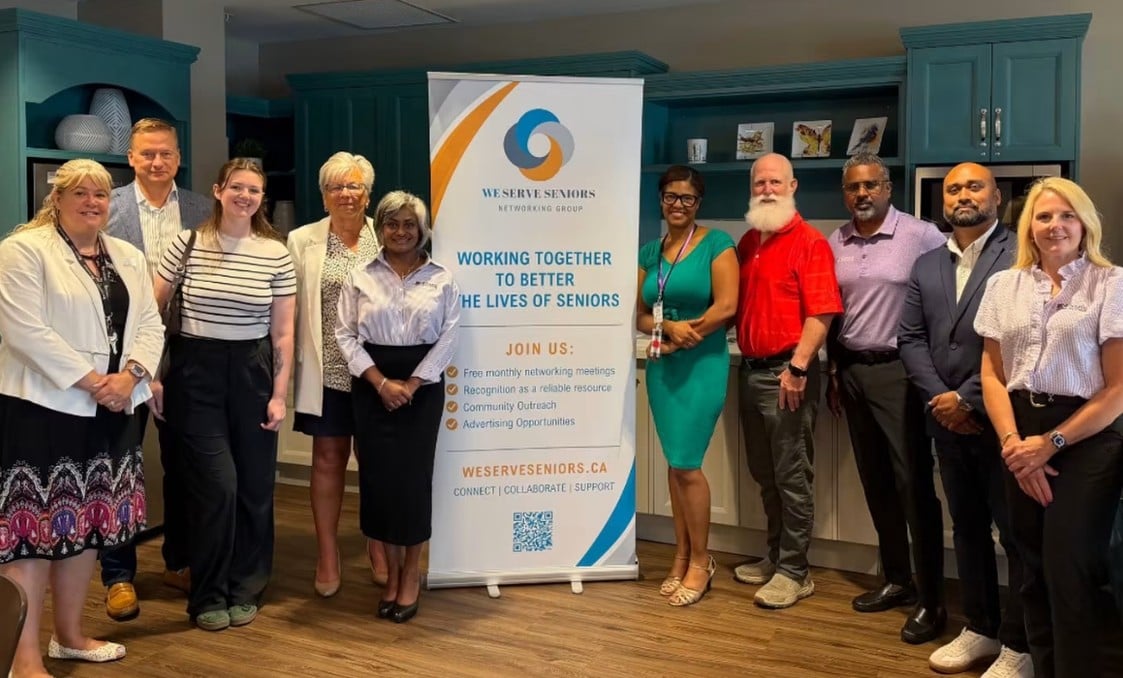
Recently, I had the opportunity to spend time with a group called We Serve Seniors, a collaborative network of professionals dedicated to supporting people through these important life transitions.
What impressed me wasn't any one profession represented in the room.
It was the recognition that no single profession has all the answers.
Legal professionals, financial planners, healthcare providers, moving specialists, community organizations and real estate professionals each understand a different part of the journey. When those perspectives come together, families receive guidance that is more connected, more thoughtful and far less overwhelming than trying to navigate everything alone.
That collaborative approach resonated with me because life transitions don't happen in neat categories. Housing, finances, health, family relationships and emotions are all connected, and the support people receive should reflect that reality.
Where I Fit In
As a REALTOR®, people often assume my role begins when someone decides to sell their home.
I've come to believe it starts much earlier.
Sometimes the most valuable thing I can offer has nothing to do with listing a property. It's listening. Helping people understand their options. Introducing them to trusted professionals. Offering perspective when everything feels uncertain. Helping families realize they don't have to figure everything out on their own.
Real estate is only one chapter in a much larger story.
If I can help someone move through that story with greater confidence and peace of mind, then I've done something far more meaningful than simply helping them buy or sell a home.
Looking Ahead
Life changes for all of us.
Our priorities evolve, our homes evolve and eventually our needs do too. None of that should be viewed as losing something. More often, it's about creating the opportunity to enjoy the next chapter with greater freedom, less stress and renewed confidence.
The more I learn, the more convinced I become that these conversations shouldn't begin with a house.
They should begin with a person.
When we take the time to understand what matters most to someone, their goals, their concerns and the life they hope to continue living the decisions that follow become much clearer.
Perhaps that's the conversation we should be having more often.
Further Reading
If this topic resonates with you, these organizations provide thoughtful, research-based information on aging, caregiving and planning for the future.
- Statistics Canada – Canada's Aging Population
- National Institute on Ageing
- Canadian Centre for Caregiving Excellence
- Canada Mortgage and Housing Corporation – Housing for Older Canadians
- World Health Organization – Decade of Healthy Ageing
Have you ever had this conversation with someone you love?
If not, perhaps the best time isn't during a crisis. It's while everyone still has the time, clarity and freedom to make decisions together.
Sometimes the most important conversations aren't about where someone is going.
They're about how we help them get there.

Check out this article next

What Long Time Homeowners Forget About Living Well in South Mississauga
When you live somewhere long enough, sometimes the good stuff stops registering. The trail you used to walk on weekends becomes background noise. The fact…
Read Article